Updated September 2026
Pet Relocation ServicePet Relocation to Dubai — Arrival-Side Coordination
Inbound only: MOCCAE import permit valid 90 days from issuance, a titre certificate when the origin is high-risk, and cargo arrival at DXB or DWC.
General guidance is free in the guides. Bespoke document review and coordination are paid.
This page is inbound only — arrival into Dubai
Arriving in Dubai covers the permit, the landing and the first days after. It is not the journey out of the UAE. Full coordination lives on pet relocation services in Dubai. Leaving the UAE lives on moving pets out of Dubai. Commercial import filing is pet import service for Dubai.
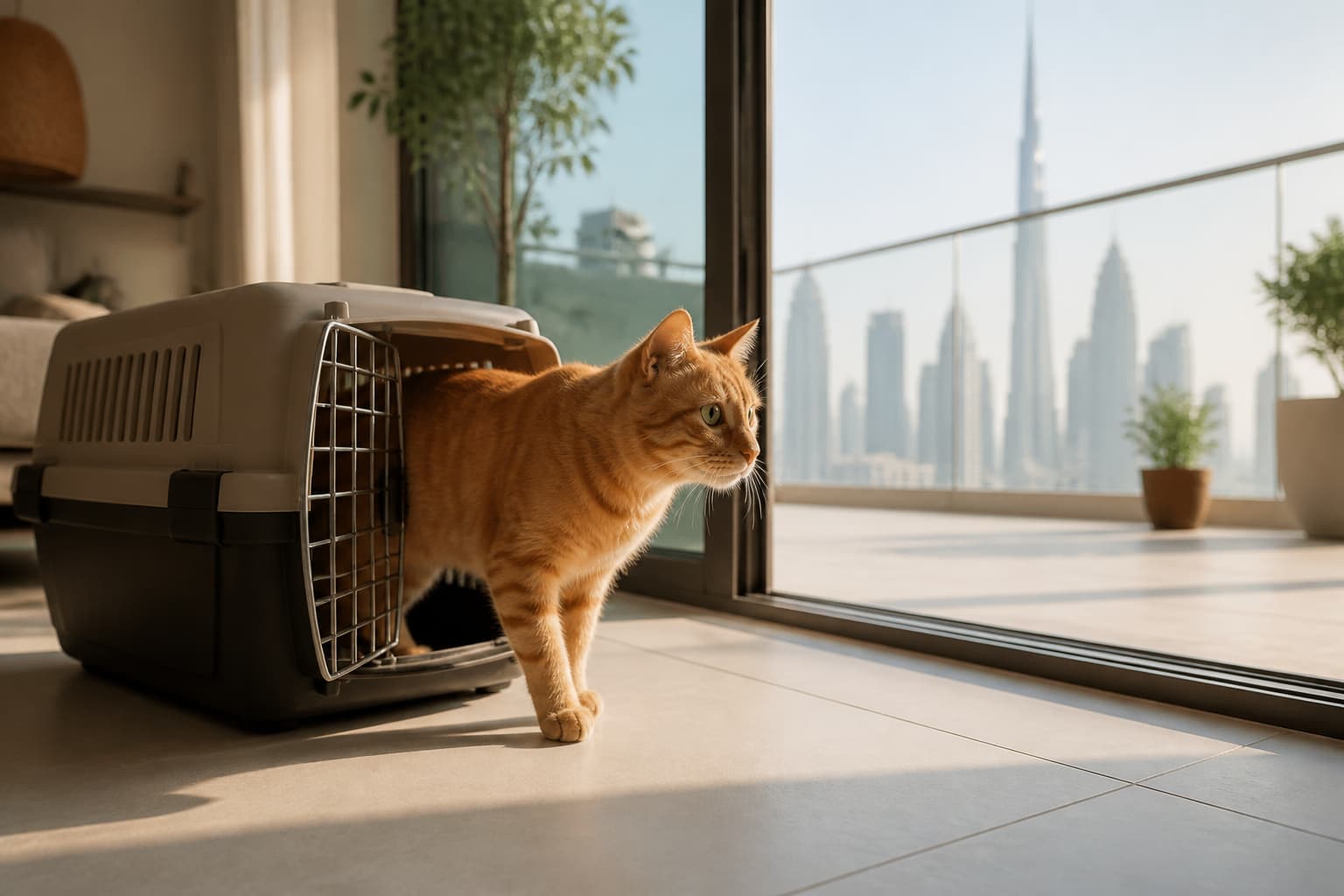
If you are flying a dog or cat into the UAE, the job is arrival-side: origin documents that MOCCAE will accept, a permit that is still valid on landing, cargo clearance at DXB or DWC, and a quiet first week in the new apartment or villa. We coordinate that sequence. We do not operate the aircraft.
Country-level differences — UK DEFRA certificates, US endorsement, India titer logistics — belong on the routes hub, not as a second copy of this page. Use this page to understand the inbound spine that every origin still has to hit.
The inbound journey, from home-country vet to a Dubai room
Order matters. Booking a flight before the permit window and titer timing are understood is the most expensive inbound mistake we see.
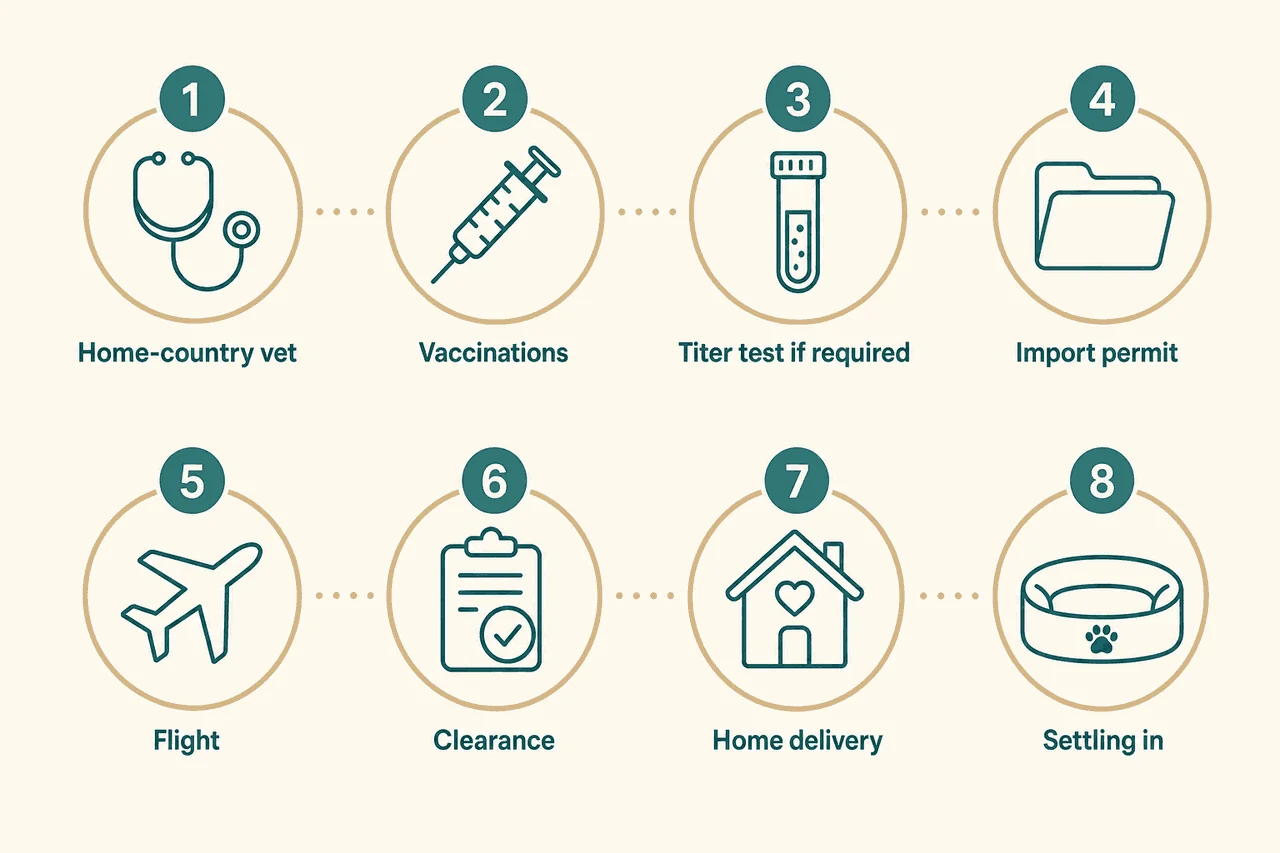
Confirm breed and origin rules
Message breed, age, weight and origin country. We check UAE breed restrictions and whether your origin is treated as titer-required. Dedicated corridors start on bringing your pet to Dubai and the other inbound guides.
Microchip, then vaccinate
Fit a permanent microchip. The number on the health certificate must match the animal. The live MOCCAE page does not restate an ISO label or a rule that the chip must be implanted before the vaccine.
Titer timing — if your origin requires it
High-risk origins need at least 0.5 IU/ml. The certificate is valid for 365 days if the vaccine stays valid and continuous and no booster is given. Otherwise the test is repeated. A first or lapsed vaccine needs at least 21 days before the test. A valid booster does not. See rabies titre test.
MOCCAE import permit — 90 days
The import permit is applied for on the official portal and is valid for 90 days from issuance. Your pet must arrive inside that window. Confirm the current portal fee when you apply; contested AED figures are not published here. Walkthrough: MOCCAE import permit.
Health certificate and parasite treatments
The origin-country health certificate is a short-validity document. Treatments are timed to arrival, not to the day you first thought about moving. Full checklist: UAE pet import requirements.
Cargo booking and crate
Almost every dog and cat enters as manifested cargo, not cabin or hold baggage. We help size an IATA crate and coordinate a pet-experienced booking. Summer and snub-nosed rules can close options — see pet travel in summer.
DXB or DWC cargo arrival
A MOCCAE inspector reviews the file and scans the chip at the cargo terminal. When the file is consistent, release is usually the same day. We coordinate the handover; we are not the inspection authority.
Settling in
A quiet room, familiar bedding, and heat-aware walks matter more than a second permit PDF. The next section covers the first week.
Arrival-day documents we actually check
The informational rules table lives on the import guide. This page lists the inbound file we review so cargo staff and the inspector see one consistent story.
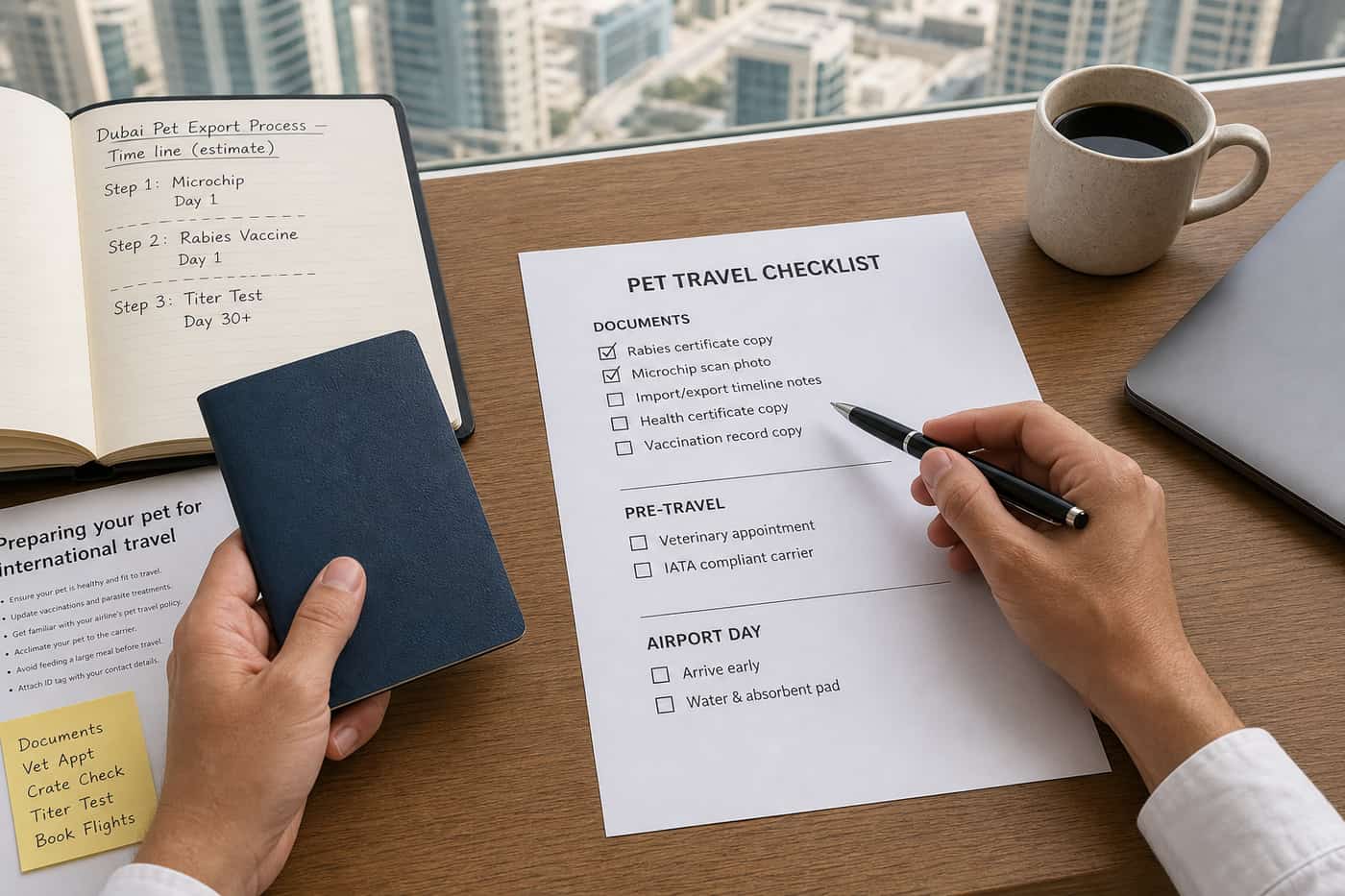
- Permanent microchip. The health-certificate number must match the animal. ISO was not restated as a current rule.
- Valid rabies vaccination and core species vaccinations
- Antibody result of at least 0.5 IU/ml when the origin is high-risk, under the 365-day certificate conditions
- MOCCAE import permit still inside its 90-day validity on the arrival date
- Origin-country government health certificate inside its short validity window
- Parasite treatments recorded to the arrival window
- Owner identification and a recent photo of the pet where the portal asks for one
Commercial filing help is on MOCCAE import and export permit service. The how-to walkthrough stays on the MOCCAE import permit guide so this page does not duplicate the rules table.
First week in Dubai — heat, buildings and a vet
Clearing cargo is the end of the flight, not the end of the inbound job. Cats and dogs settle faster when the first days are boring on purpose.
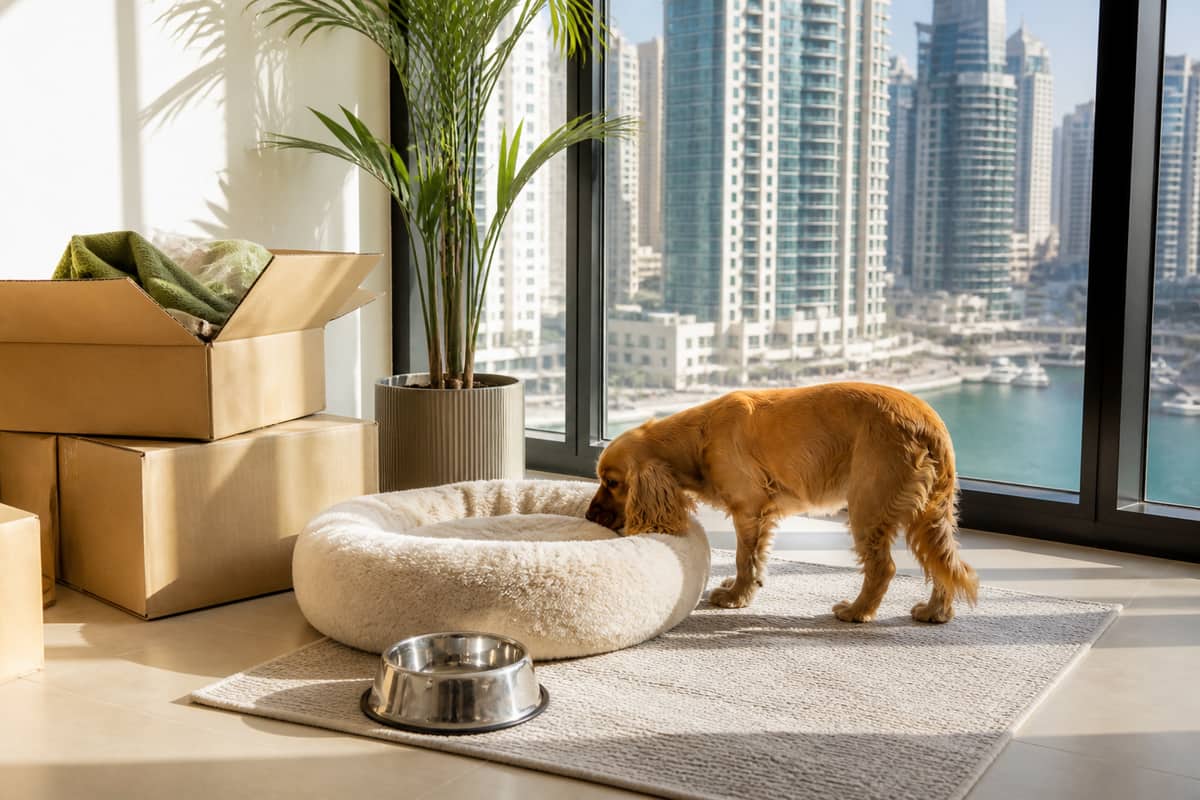
Give the pet one room with their own bed, bowls and a familiar item from home. Let them expand the map of the apartment over several days. High-rise buildings add lift and lobby rules; villas add garden heat. Community-specific pickup notes live on Dubai communities we cover.
From late spring through early autumn, pavement can burn paws. Walk early or after dusk, carry water, and never leave a pet in a parked car. Import bans are the names on the banned dog breeds page. A building may still set its own pet rule. Ask the building. This page does not publish a muzzle or insurance rule.
Register with a local clinic in the first week so you have a contact for routine care and any municipality registration your community expects. Keep the import file — you will need it for boarding, future travel or an eventual outbound move. The longer post-arrival walkthrough — cargo clearance, collection, settling and Aleef registration — is the post-arrival guide for pets.
Inbound cost drivers — quote on WhatsApp, no fee table
We do not publish permit, release or cargo numerals on this inbound page. Those figures are contested or route-specific. Qualitative drivers plus a WhatsApp quote are what we can stand behind today.
What moves an inbound quote: origin country (titer or not), pet size and crate, season, whether you want document guidance only or arrival-day coordination, and whether last-mile delivery is a tower or a villa. Read what pet relocation costs in 2026 for the driver list, then request your WhatsApp quote.
If you already know the country corridor, open that route page from the routes hub so we are not guessing origin paperwork. Then come back here for the arrival-side spine.
Frequently Asked Questions
Official Sources
We coordinate the paperwork, but the rules are set by government and industry authorities. Always confirm the current requirements directly with the official sources.
Last verified: 6 September 2026. Confirm current figures on the official MOCCAE portal before you apply.
Ready to book a managed move?
WhatsApp during business hours with pet type, breed, route and month if you want us to run the file. Guides stay free to read.
Tell us about your moveGeneral guidance is free in the guides. Bespoke document review and coordination are paid.